How to photograph dolphins from a boat: practical tips for sunrise shots

Photographing dolphins is harder than it looks. They surface for a second, they move fast, and you are standing on a boat that is never quite still. The good news is that a few simple habits make a big difference, whether you carry a camera with a zoom lens or just a phone.
These dolphin photography tips are written for the sunrise panga trip from Bahía Principal in Puerto Escondido, but they work on most small boats.
First, set your expectations
Nobody gets a perfect leaping spinner on every trip. A realistic goal is a handful of sharp frames out of several hundred. Dolphins often come within a few meters of the boat, and they sometimes ride the bow wake, so you do not need extreme gear. What you need is patience and a plan.
It also helps to decide early that you will put the camera down for part of the trip. The best moments are the ones you watch with your own eyes.

Where to sit on the boat
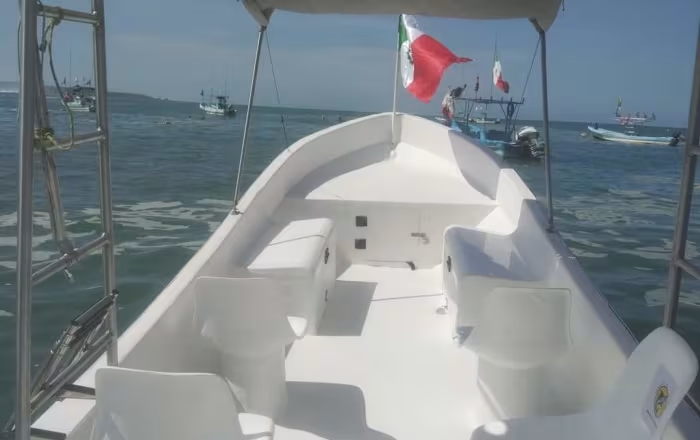
On an open panga, your seat matters more than your lens:
- Toward the front gives you the best view when dolphins ride the bow, but it is also the bumpiest spot. If you are prone to motion sickness, read our seasickness tips for boat tours before choosing.
- The middle is steadier and good for a mix of angles.
- Stay seated or braced while the boat moves. Stand up only when the captain has stopped the engine and says it is fine.
Follow your captain's instructions at all times. Do not lean over the side for a shot, and keep your feet clear of the edge.
Light: why sunrise is your friend
The early start is a gift for photography. Low, warm light makes the water look rich and gives dolphin backs a soft glow. Harsh midday sun flattens everything and creates glare on the surface.
- Keep the sun behind you or to one side when you can. Shooting straight into it turns dolphins into dark silhouettes, which can look great on purpose but is hard to get right on a moving boat.
- You cannot choose the light, but you can choose which side of the boat to shoot from once the engine is off and the boat drifts. Ask your guide.
- A polarizing filter can cut surface glare if you use a camera with interchangeable lenses.
Camera settings that work
Dolphins are fast, and the boat is moving too. Your main enemy is motion blur.
- Shutter speed: start at 1/1000 s or faster. For leaps and spins, 1/1600 s or more is safer.
- Mode: shutter priority, or manual with auto ISO, so the camera raises the ISO as light changes.
- Focus: continuous autofocus (AF-C or AI Servo) with a wider focus area. Single-point focus is hard to keep on a moving animal.
- Burst mode: on. Hold the shutter as the dolphin comes up, not after.
- Aperture: f/5.6 to f/8 gives a bit of margin if focus is slightly off.
- Lens: a mid-range zoom is plenty. Very long telephoto lenses are heavy, hard to aim from a moving panga and often too tight when dolphins come close.
Use a wrist or neck strap. A wet deck and a dropped camera are an expensive combination.
Taking dolphin photos with a phone
Modern phones can capture good dolphin photos if you set them up before the animals arrive:
- Use burst mode (hold the shutter button) or record video and pull stills from it afterwards.
- Clean the lens with a dry cloth. Salt spray leaves a haze that ruins sharpness, and it is the most common reason phone shots look soft.
- Lock focus and exposure by tapping and holding on the water where you expect the dolphins to surface.
- Avoid digital zoom. Crop later instead. Zoomed-in phone images lose detail quickly.
- Keep it in a waterproof case or pouch with a wrist strap, and make sure the touchscreen still responds through it.
- Charge it fully and close background apps. Constant video drains a battery fast.
How to track and anticipate dolphins
This is the skill that separates lucky shots from repeatable ones.
- Watch the animals, not the screen. Look at the water with both eyes open, then raise the camera when you see a dolphin heading your way.
- Listen to your guide. Captains read the water: diving seabirds, bait fish and a distant splash usually mean dolphins are about to appear.
- Pre-focus on an area where dolphins are likely to surface, such as along the bow wake or near a recent splash.
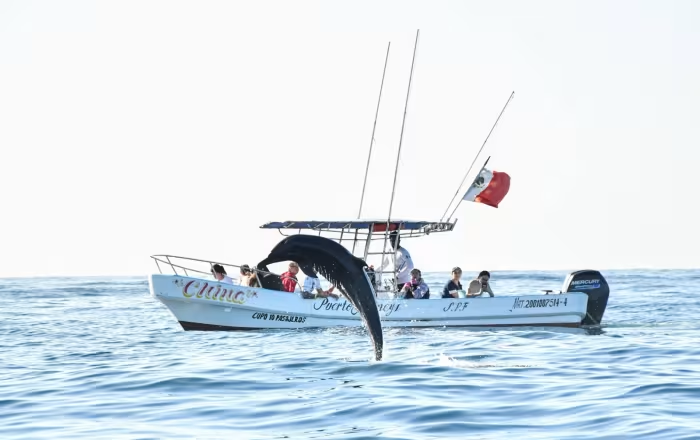
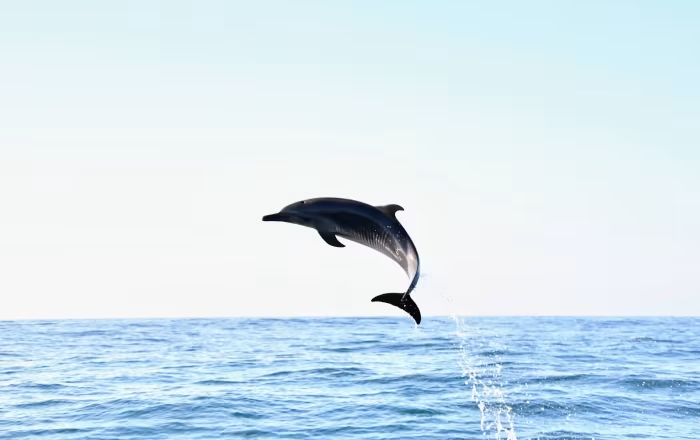
- Expect spinners to leap in series. If one jumps, keep your camera up and the shutter ready, because more often follow.
- Shoot at their level rather than straight down when you can. A low angle looks more natural than a view onto the back of the animal.
If you want to know which animals you are looking at, our guide to the dolphin species of Puerto Escondido explains how spinners, bottlenose and spotted dolphins differ.

Beyond dolphins: other shots worth taking
Do not let one subject take over the whole trip. The same morning often offers:
- Green sea turtles and spotted eagle rays near the surface.
- Flying fish skimming away from the bow.
- The coastline from the sea, including Zicatela's cliffs, which look very different from the water.
- Humpback whales from November to March. Our whale watching guide explains the season.
- People: the faces of fellow travelers when the first pod arrives are often the best photos of the day.
Respect the animals while you shoot
A good photo is never worth disturbing a wild animal. A few rules apply to everyone on board:
- No flash. It is pointless at that distance in daylight anyway.
- Do not ask the captain to chase the dolphins or cut across a pod to get closer. Let them approach the boat on their own terms.
- Do not reach into the water or try to touch them. Touching wild dolphins is not allowed under Mexican wildlife regulations.
- Leave the drone at the hotel. Ask your guide before bringing any extra equipment.
More detail is in our guide to responsible dolphin watching.
Frequently asked questions
Do I need an expensive camera?
No. A recent phone with burst mode or a basic camera with a zoom lens is enough, because dolphins often come very close to the boat. Timing and a clean lens matter more than gear.
What is the best shutter speed for dolphins?
Start at 1/1000 s and go faster for leaps. A faster shutter freezes the animal and also reduces the blur from the boat's movement.
Is it better to shoot video or photos?
Both work. Video is easier on a phone because you can pull a sharp still from it later. On a camera, burst photos usually give higher quality.
What should I bring for photography?
A strapped camera or a phone in a waterproof case, a microfiber cloth for salt spray, a charged battery and a spare memory card. Our packing list for a dolphin tour covers the rest.
Final thought
Set your camera before the dolphins show up, keep your eyes on the water and be ready to put the camera down. You will come home with a few good frames, and with memories that do not need a screen.
To pick your morning, read about the best time for dolphin watching in Puerto Escondido.