Whale watching in Puerto Escondido: a humpback season guide
Every winter, the sea off Puerto Escondido gets some very large visitors. Humpback whales travel down the Pacific coast of Mexico to spend the cold months in warm water, and the Oaxacan coast sits right on their route. From roughly November to March, the morning boat that goes out for dolphins regularly comes back with whale stories too.
This guide covers when the humpbacks are here, what they are doing, what you can realistically expect to see from a small boat, and the rules that keep both you and the whales comfortable.
When is whale season in Puerto Escondido?
The humpback season on this stretch of coast runs from November through March. The first whales usually show up in November, sightings become more frequent through December, and January and February are typically the busiest months. By late March most whales have started their long trip back north, and by April sightings are rare.
Nature doesn't follow a calendar, so the edges of the season shift a little from year to year. A whale in late October or early April is not unheard of, but it is not something to plan a trip around. If whales are high on your list, aim for mid-December to early March.
Why the humpbacks come here
Humpbacks spend the summer feeding in cold, food-rich waters far to the north. In winter they migrate south to warm tropical seas to mate and give birth. The Mexican Pacific is one of the main breeding areas in the North Pacific, and the coast of Oaxaca is part of that winter range, both for whales that stay a while and for whales passing through toward Central America.
That explains a lot of what you see on the water:
- Males compete for females, which means chasing, splashing and sometimes spectacular surface activity.
- Mothers travel with newborn calves, usually slowly and close to the surface, with the calf popping up to breathe more often than the adult.
- Very little feeding happens here. Humpbacks mostly live off their fat reserves in winter, so you won't see the lunge-feeding of northern waters.
What you can expect to see
Whale sightings vary much more than dolphin sightings. Some mornings you see a distant blow and a tail; other mornings a whale breaches again and again. Here is the usual vocabulary of a humpback encounter:
- The blow: a tall, bushy column of mist when the whale exhales. It is often the first thing anyone spots, sometimes far away.
- The arched back and dorsal fin: as the whale rolls through the surface between breaths.
- The fluke: the tail lifted out of the water before a deeper dive. The pattern on the underside is unique to each whale, like a fingerprint.
- Pectoral fin slaps and tail slaps: humpbacks have the longest flippers of any whale, and the slap carries a long way across calm water.
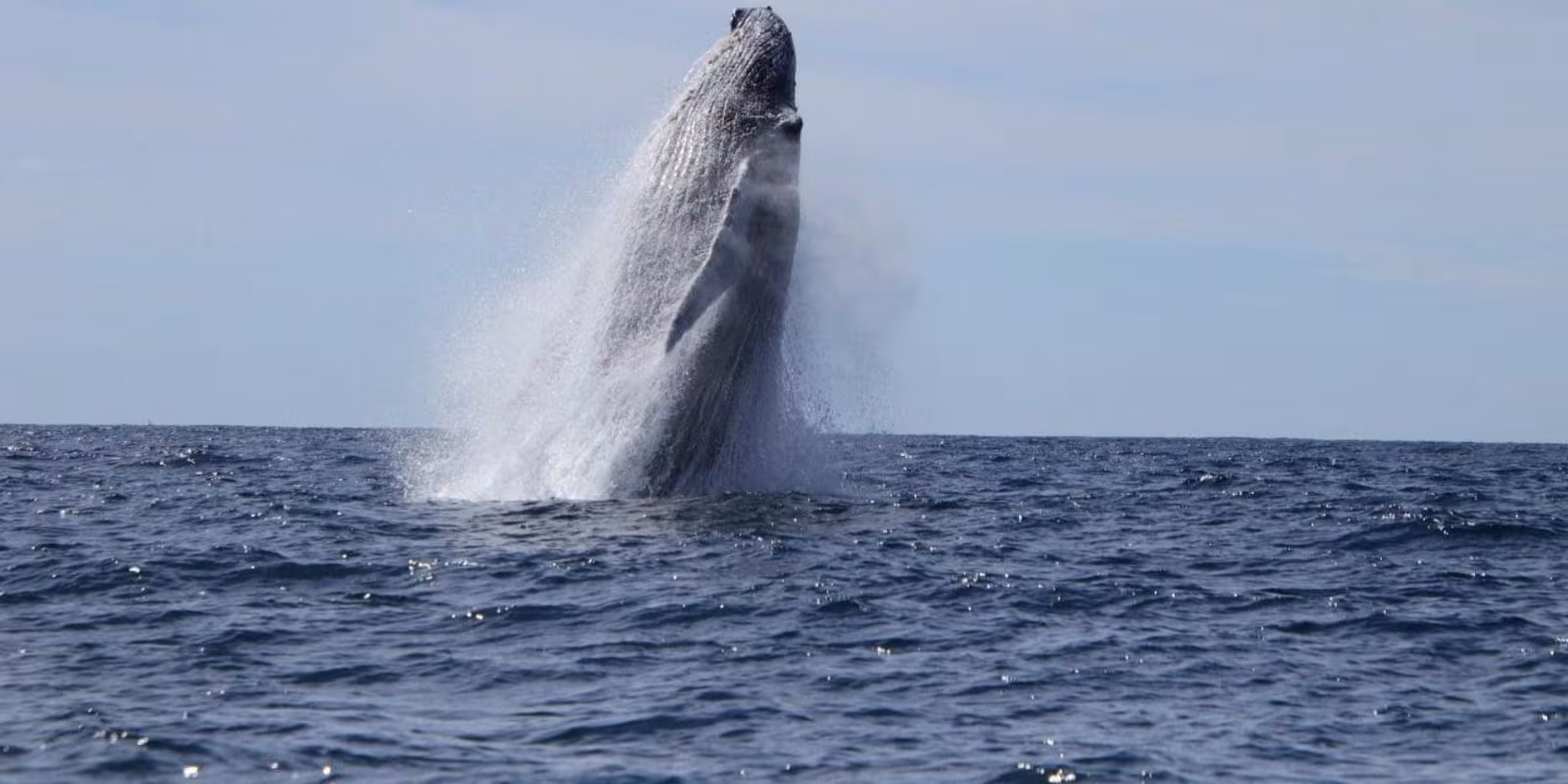
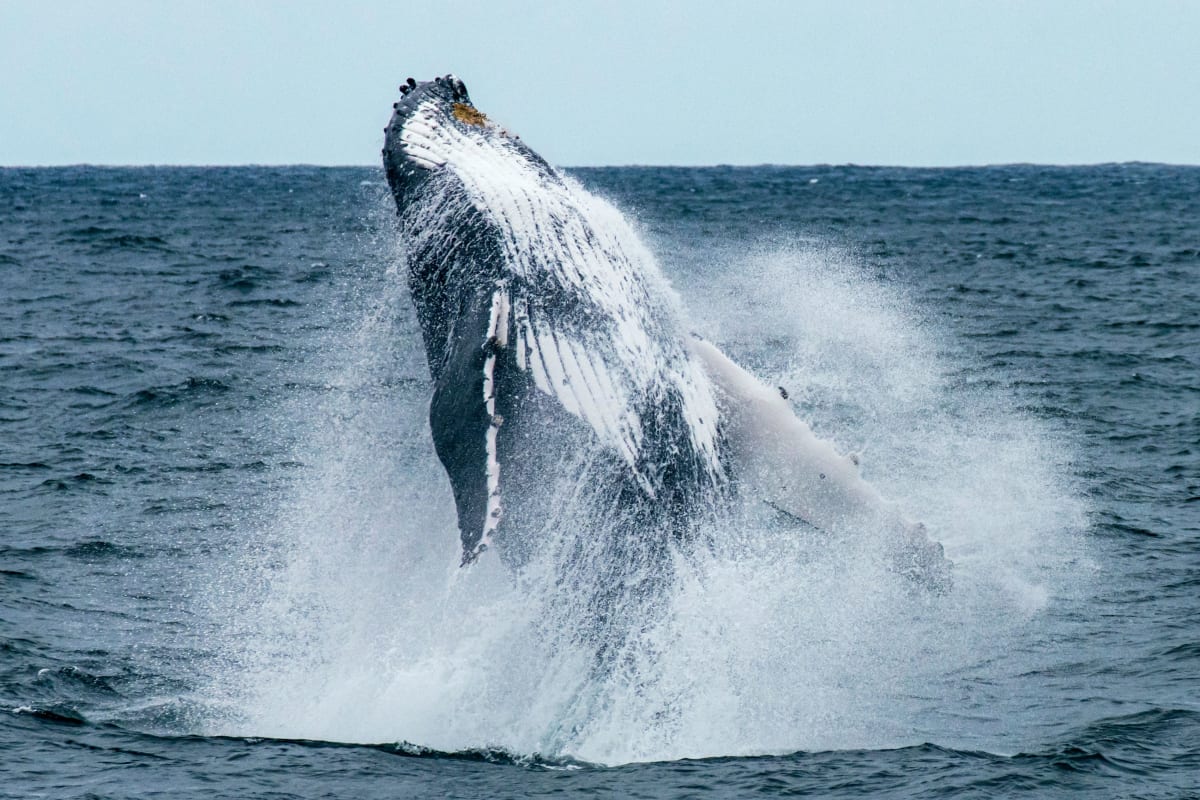
- The breach: most of the body launched out of the water and crashing back down. Nobody can promise one, but in peak season it happens more often than people expect.
Humpback song is part of the breeding season too. Only males sing, and the sound travels underwater, so you won't hear it from the boat, but it is going on beneath you on most winter mornings.
How whale watching works on the sunrise tour
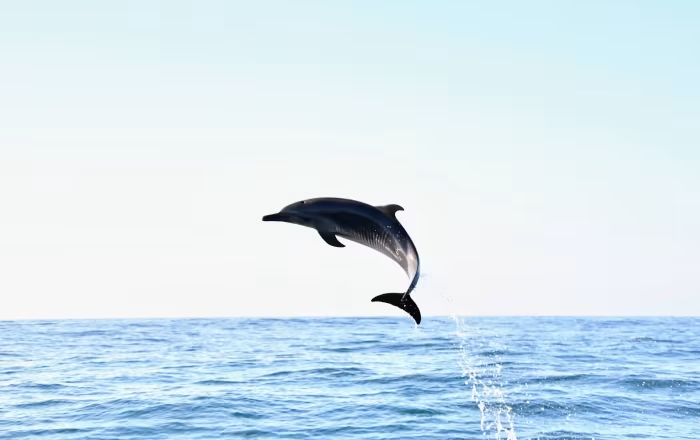
Our tour is a dolphin tour first. Dolphins live off Puerto Escondido all year and are seen on more than 95% of departures. In whale season, humpbacks are a regular bonus at no extra cost: the captain watches for blows the whole morning, and the return leg along the coast often turns into whale time.
The practical details stay the same all year:
- Hotel pickup at 6:30 AM in Puerto Escondido's pickup zone, boats out of Bahía Principal around 7:00 AM.
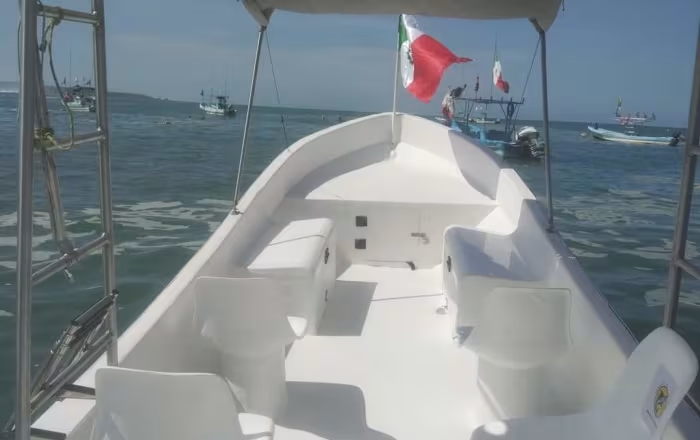
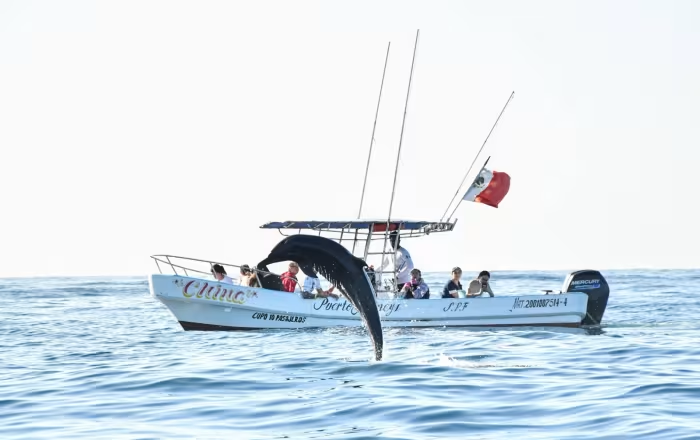
- About 3 hours on a traditional panga, back on the beach by about 10:00 AM.
- Life jackets for everyone, including child sizes, bottled water and a local captain with a bilingual guide.
Early morning is also the best light for whales. The sea is usually at its flattest, which makes blows much easier to see, and you aren't squinting into the midday glare.
If you want more time and flexibility, a private boat charter (up to 10 passengers, morning or sunset departure) lets your group set its own pace. No boat can guarantee whales, private or not.
The rules around whales
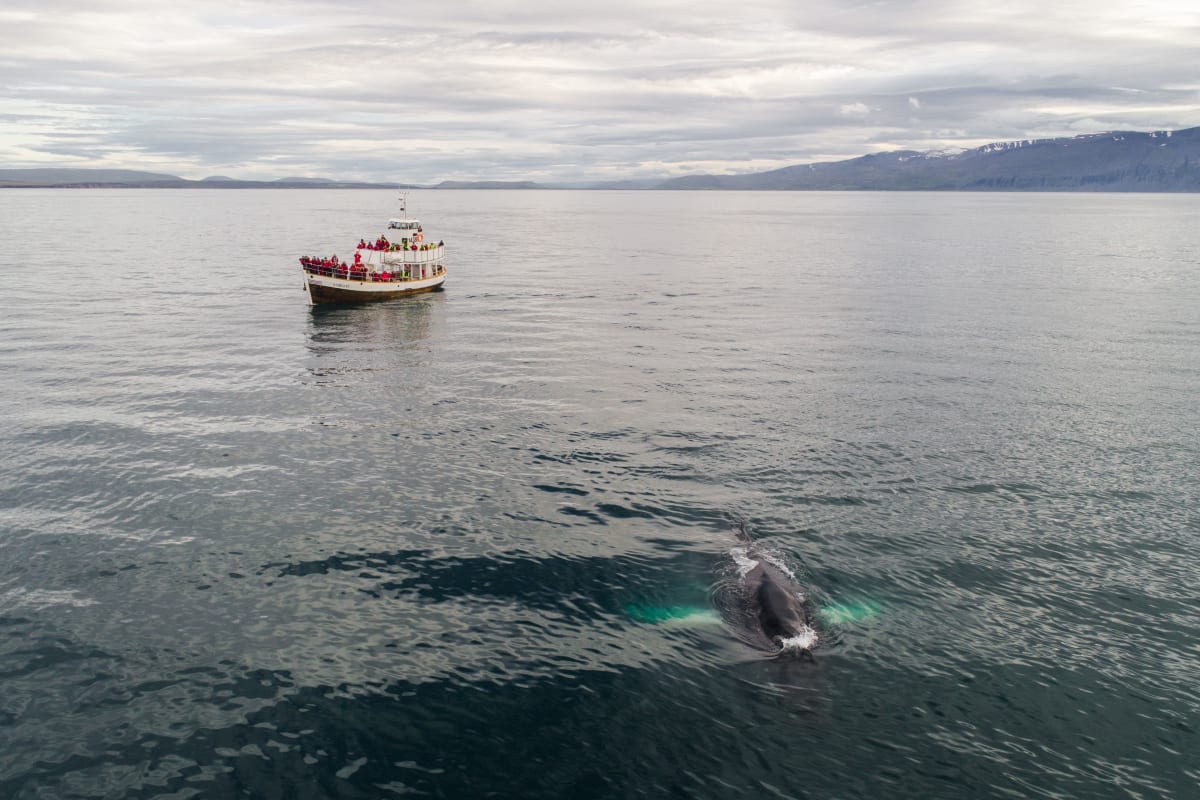
In Mexico, whale watching is regulated by a federal standard, NOM-131-SEMARNAT-2010. Among other things, it sets minimum approach distances, limits how many boats can be around the same whales and for how long, and calls for extra care around mothers with calves. In practice, a good captain:
- Approaches slowly from the side or from behind, never head-on and never cutting across the whale's path.
- Keeps a respectful distance and slows down or idles the engine when whales are near.
- Doesn't chase, split up or surround a group, and leaves if the whales show signs of being disturbed.
- Gives mothers and calves extra room. A calf that is pushed into constant diving is a calf that can't rest.
Swimming with humpbacks is not allowed. Occasionally a curious whale chooses to come closer to a drifting boat. That is the whale's decision, and it is the best encounter you can have.
Tips for a good whale morning
- Book a few days ahead. Whale season overlaps with high season, and sunrise departures fill up, especially around Christmas, New Year and Easter. Cancellation is free up to 24 hours before departure.
- Bring a light jacket. Winter mornings on the water can be cool before the sun climbs.
- Watch the horizon, not just the boat. Call out any blow or splash you spot; extra eyes help the captain.
- Shoot in bursts. A breach lasts a couple of seconds. Set your phone or camera to burst mode and keep it ready after the first jump, because whales often breach more than once.
- Prone to seasickness? Take a tablet 30–60 minutes before departure, sit toward the back and keep your eyes on the horizon.
Can you see whales from the shore?
Sometimes. On calm winter mornings, blows and breaches can be visible from high points along the coast, and people do spot them from the beach. But they are usually far out, and you need luck and binoculars. From a boat, the odds and the distance are completely different.
More to read before your trip
Whales are the winter extra, but the dolphins are there every month. Our month-by-month guide to dolphin watching in Puerto Escondido shows what each season brings, and the species guide helps you tell who is at the bow.