Seasickness on a boat tour: how to prevent it (and what to do if it hits)

It is the question we hear most from people who are excited about the dolphins but nervous about the boat: will I get seasick? The honest answer is that the morning Pacific off Puerto Escondido is usually gentle, but it is still the open ocean, and there is always some swell. Most people feel fine. Some feel a little off for a few minutes. A few, especially those who already know they are sensitive, need a plan.
The good news: seasickness is far easier to prevent than to cure once it starts. Here is what actually helps, in the order you will need it.
Why the sea makes some people sick
Motion sickness happens when your senses disagree. Your inner ear feels the boat rising and falling, while your eyes, fixed on something that moves with you (your phone, the seat in front, the floor of the boat), report that nothing is moving. Your brain gets conflicting signals and some people respond with yawning, cold sweat, headache and nausea.
That is why almost every useful tip comes down to two things: helping your eyes and your inner ear agree, and arriving on the boat in good shape.

The night before
- Go easy on the mezcal. A hangover and a swell are a bad combination. Dehydration makes nausea much more likely.
- Get some sleep. Pickup is at 6:30 AM. Being tired lowers your tolerance to motion.
- Buy your remedy in advance. If you plan to take a tablet, get it the day before from a pharmacy in town so you are not hunting for one at dawn.
Seasickness tablets: when and what
If you know you get carsick or have been seasick before, a tablet is the single most effective step. The key is timing: take it 30 to 60 minutes before departure, which on this tour means around the time of your hotel pickup. Taken once you already feel sick, tablets work poorly because your stomach is no longer absorbing them well.
Mexican pharmacies sell over-the-counter motion sickness tablets, most commonly dimenhydrinate (you will see it as Dramamine or as a generic). A few things to know:
- They can make you drowsy. Many people doze on the ride back, which is not the worst outcome.
- Read the label for doses, and ask a pharmacist or your doctor first if you are pregnant, take other medication, or are giving it to a child.
- If you have a remedy that already works for you at home, bring it. Familiar beats experimental.
Some travelers prefer ginger (candies, capsules or tea) or acupressure wristbands. The evidence for these is mixed, but they are harmless to try, and plenty of people swear by them. For a medical overview of the options, the CDC's travel guidance on motion sickness is a reliable reference.
Breakfast: eat something, but keep it light
An empty stomach makes seasickness worse, and so does a heavy, greasy one. Before a sunrise tour, aim for something plain: a piece of bread or toast, a banana, crackers, a little fruit. Skip the big plate of chilaquiles and the extra coffee; save them for the late breakfast on the beach when you are back. Bottled water is provided on the boat, so keep sipping.
On the boat: where to sit and where to look
This is where most of the difference is made.
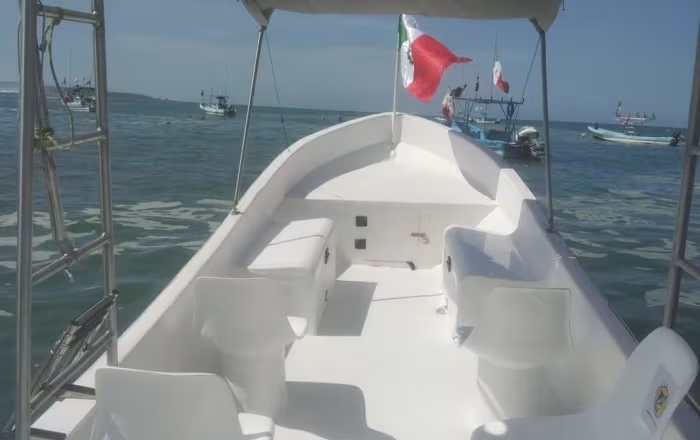
- Sit toward the back of the panga. The bow rises and falls the most; the stern moves far less. Tell your guide at the briefing that you are sensitive and they will help you find the best spot.
- Keep your eyes on the horizon. A fixed, distant line lets your eyes confirm what your inner ear feels. The coastline works too.
- Put the phone away while the boat is moving. Scrolling or reviewing photos is the fastest way to feel queasy. Shoot when the dolphins are around, check the pictures on land.
- Stay in the fresh air and face forward. The open panga helps here: there is no stuffy cabin and no diesel smell trapped around you.
- Keep your body loose. Let your hips move with the boat instead of bracing against every wave.
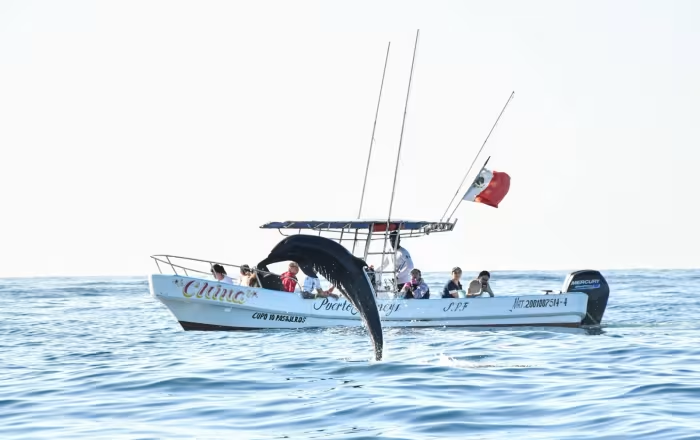
One thing worth knowing: the moment the captain cuts the engine to let the dolphins come to the boat is when the gentle rocking is most noticeable. If you are sensitive, that is the moment to look up and out rather than down into the water for long stretches.
If you start to feel sick anyway
Catch it early. The first signs are usually yawning, feeling warm or clammy, and a sudden lack of interest in what is happening around you.
- Tell your guide. Captains here have seen it many times; nobody will be embarrassed for you.
- Move to the back, look at the horizon and take slow, deep breaths of the sea air.
- Sip water in small amounts and nibble a plain cracker if you brought one.
- If you need to be sick, do it over the side, downwind, holding on. Most people feel much better right afterward.
The tour is three hours in total, much of it close to the coast, and the boat is back on Bahía Principal around 9:30 to 10:00 AM. Even on a rough morning, solid ground is never far away.

Is the dolphin tour a good idea if I get seasick easily?
For most people, yes. A few reasons it tends to go well:
- Early morning is the calmest time. The sea is usually flattest before the afternoon wind picks up, which is one of the reasons the boats leave at sunrise.
- It is a short trip. Three hours is very different from a full day offshore.
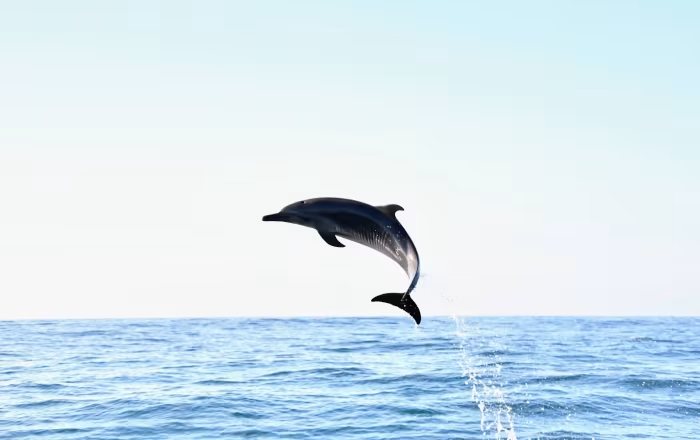
- Distraction is powerful. It is hard to think about your stomach when a pod of spinner dolphins is riding the bow.
- Weather is taken seriously. When the port captain closes the bay for big swell, boats do not go out, and you get a full refund or a free rebooking.
If you are very sensitive, consider booking for the drier months, when the sea is usually at its calmest, or a private boat, where your group sets the pace and can ask the captain to head back early without worrying about anyone else.
Quick checklist
- Light dinner, little alcohol, decent sleep.
- Tablet 30 to 60 minutes before departure, if you use one.
- Small, plain breakfast. Water.
- Back of the boat, eyes on the horizon, phone in your pocket.
- Speak up early if you feel off.
With that sorted, you can focus on the good part. Before you go, have a look at how we watch dolphins responsibly so you know what to expect when the engine goes quiet.