Spinner dolphins: why they leap and spin
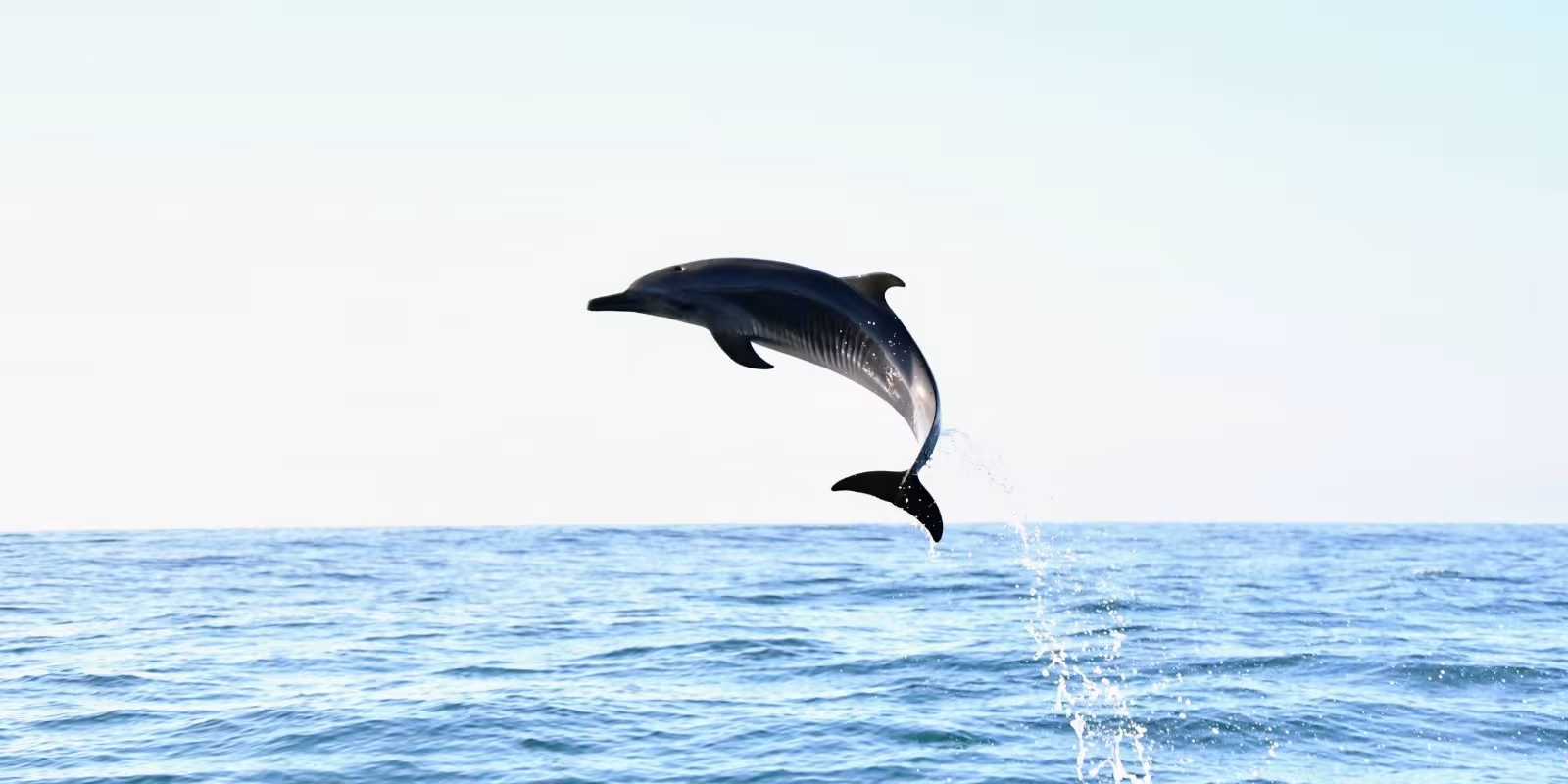
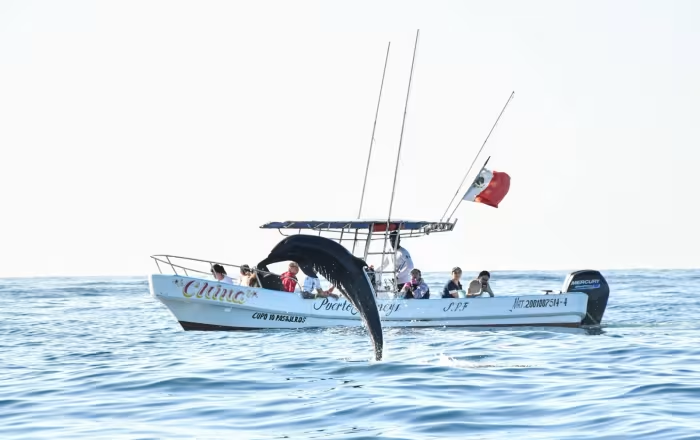
Most mornings off Puerto Escondido, there is a moment when the whole boat goes quiet. A slim gray dolphin shoots straight out of the water, twists around its own axis two, three, four times, and drops back in with a loud slap. Then another one does it. Then three at once. That is the spinner dolphin, and it is the reason many people book a sunrise tour in the first place.
So why do they do it? The honest answer is that nobody knows for sure. But researchers have watched spinners for decades, and there are some good ideas worth knowing before you head out.
Meet the spinner dolphin
The spinner dolphin (Stenella longirostris) lives in warm tropical seas around the world. It is a small, slender dolphin, usually under two meters long, with a long thin beak and a dark back that fades to a lighter belly. It travels in pods that can number a few dozen or several hundred animals, and in the eastern Pacific it often mixes with pantropical spotted dolphins.
The spinners along this coast belong to the eastern Pacific forms of the species, which tend to be smaller and darker than the spinners of Hawaii. One form, the Central American spinner, is described from the coastal waters between southern Mexico and Central America. For a quick comparison with the bottlenose and spotted dolphins you may also meet, see our guide to the dolphin species of Puerto Escondido.

How many times can a spinner dolphin spin?
A spinner can rotate several times in a single leap, and up to about seven turns has been recorded. It gets that spin from underwater: the dolphin accelerates toward the surface, twisting its body and tail as it goes, so it leaves the water already rotating. Once airborne it keeps spinning on momentum until gravity brings it back down, sometimes a couple of meters above the surface at the top of the jump.
From the boat it happens fast, usually in about a second. Most people miss the first few and then start watching the right patch of water.
Why do spinner dolphins spin? The main theories
Scientists have several explanations, and they are not mutually exclusive. A spinner may leap for different reasons at different times of day.
1. Sending a signal to the pod
The leading idea is communication. When a spinner re-enters the water it creates a burst of noise and a cloud of bubbles that other dolphins can hear and "see" with their sonar from a distance. In a big pod spread over open water, that splash may work like a beacon, telling the group where its members are and helping it stay together.
2. Shaking off hitchhikers
Spinners often carry remoras, the sucker fish that attach to larger animals. Researchers who studied the forces involved found that a hard spinning re-entry could be enough to dislodge a remora. It probably does not explain every spin, but it may explain some of them.
3. Waking up and getting ready to feed
In places where spinners have been studied closely, such as Hawaii, they rest quietly in sheltered water during part of the day and head offshore to hunt at night. Aerial activity tends to increase as the pod shifts from resting to active, as if the leaps help the group "wake up" and coordinate before moving out.
4. Play and social energy
Young spinners leap a lot, often clumsily, and adults sometimes spin in groups during social moments. Practice, display and simple exuberance are part of the picture too, even if they are harder to measure.
Not every jump is a spin
Once you start watching, you will notice that spinners have a whole repertoire. Our captains point these out on the morning tour:
- The spin: a vertical leap with one or more full rotations, then a big splash. The classic.
- The arc or "salmon leap": a clean, low arc out of the water, often while the pod is traveling fast.
- Tail slaps: the dolphin lifts its tail and brings it down hard on the surface. Loud, and probably another way to make noise.
- Back slaps and side slaps: a leap that ends with the dolphin landing flat on its back or side on purpose.
- Head-over-tail flips: less common, a forward somersault that looks almost like a cartwheel.
When several of these happen together, it usually means the pod is active and social, which is the best time to cut the engine and simply watch.

When are spinners most active off Puerto Escondido?
Spinner dolphins are seen off Puerto Escondido all year, which is why the tour runs every season. Activity varies from day to day: some mornings the pod is traveling and only breaks the surface to breathe, other mornings it seems like every animal in the group is leaping. Sea conditions matter too, since calm water makes the splashes easier to spot from far away.
Early morning is a good window, with flat seas and soft light. That is one reason the tour leaves at first light: pickup is at 6:30 AM and you are back on Bahía Principal by about 10:00 AM. If you want to know what the rest of the morning looks like, read what to expect on the sunrise dolphin tour.
How to watch spinners well
- Scan wide, not close. Look for splashes and white water on the horizon. Spinners are often spotted by their jumps long before you see a fin.
- Watch where the last one landed. Leaps often come in series from the same animal or group.
- Put the camera on burst mode. A spin lasts about a second. Our dolphin photography tips explain settings that work from a moving panga.
- Let them come. Spinners are sensitive to boat noise and pressure. Captains never chase or cut through a pod; they slow down, stop, and let the dolphins choose how close to come.
A species worth protecting
In the eastern tropical Pacific, spinner dolphins were caught in large numbers in tuna purse-seine nets in the 1960s and 1970s, and some populations have been slow to recover. Today they are protected in Mexico, and swimming with, touching or feeding wild dolphins is not allowed. You can read more about the species on the NOAA Fisheries spinner dolphin page.
Watching from the boat, with the engine off and the animals deciding the distance, is the best way to see the spin and leave the pod exactly as you found it. Our guide to responsible dolphin watching covers the rules the captains follow out there.