Why do whales breach? Humpback behavior explained
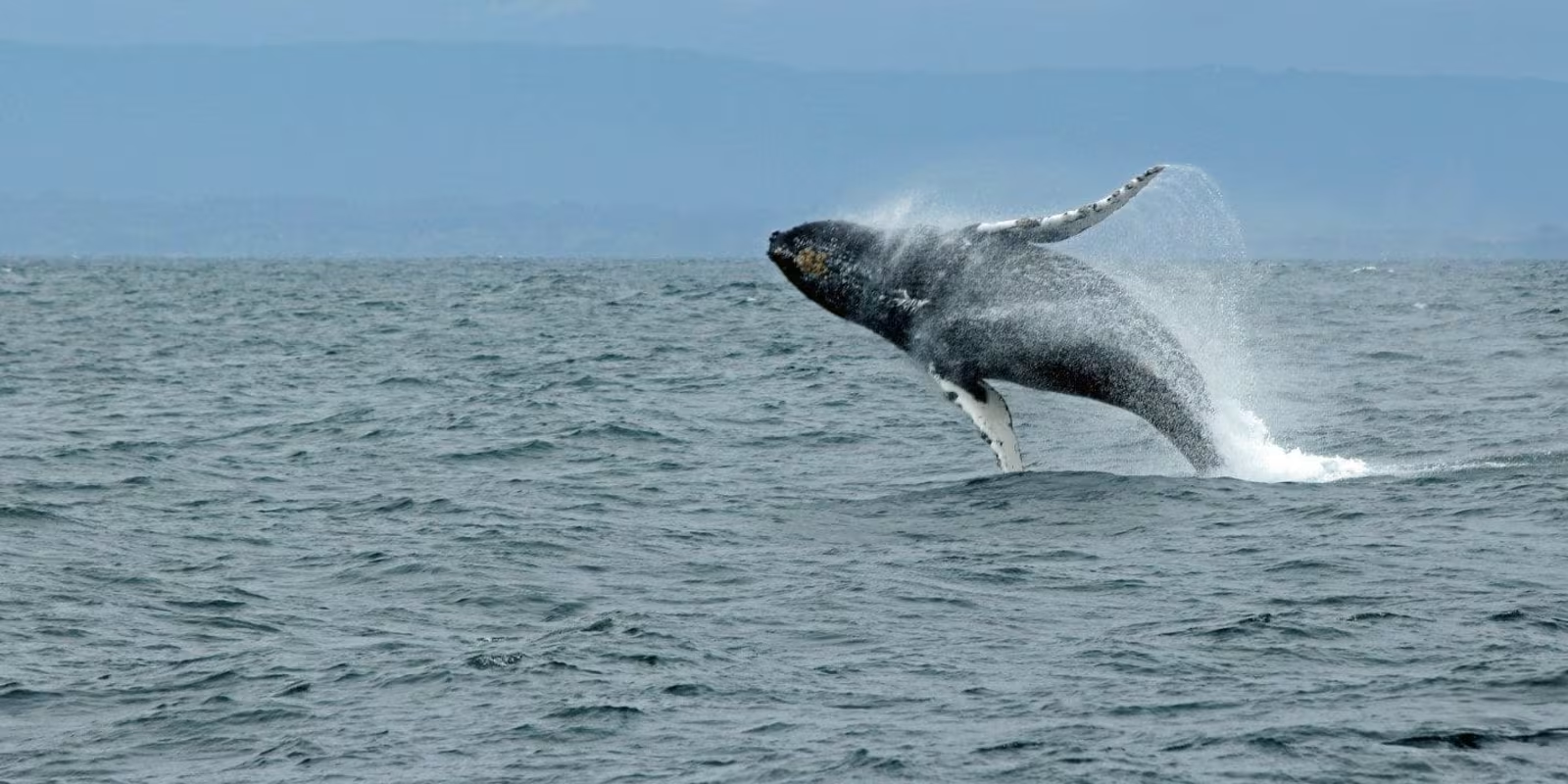
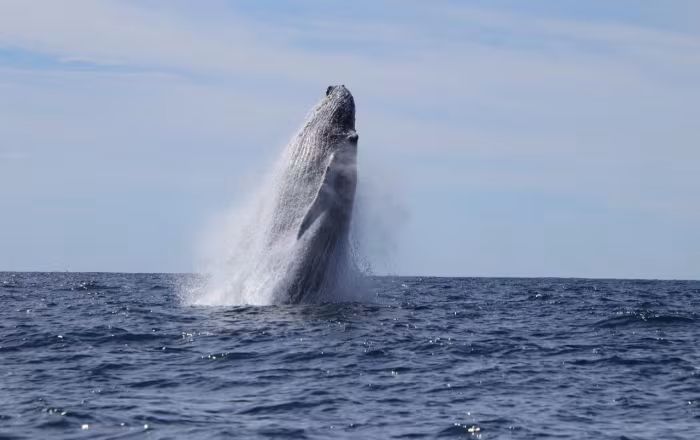
For a second or two, it makes no sense. An animal as long as a bus rises out of a flat sea, twists in the air and lands on its side with a boom you feel in your chest a moment after you see the spray. Then the boat goes quiet, and someone asks the question we hear on almost every winter morning: why do whales breach?
The honest answer is that nobody knows for certain. Researchers have good ideas, built on years of watching individual whales, but a breach probably does not have a single purpose. Here is what the evidence points to.
What a breach actually is
A breach is when a whale launches most of its body out of the water and falls back in. Humpbacks are the species most people see doing it, and they are the whales that pass Puerto Escondido every winter. An adult humpback is roughly 14 to 16 meters long and weighs tens of tons, so getting that much of itself into the air takes a powerful burst of swimming from below the surface. It is not a casual move.
That effort matters for the theories below: whatever a breach is for, it costs the whale real energy, which suggests it is worth the price. A breach is also different from a pectoral fin slap, a tail slap or a head rise, which are quieter ways of making a splash and often show up in the same bouts of activity.
The main theories
1. Communication
Sound travels much farther in water than in air, and a breach is loud. The crash of a whale landing can carry a long way underwater, which makes it a good way to say "I'm here" to other whales. Some researchers have noticed more breaching when the sea is rough and noisy, when other signals are harder to hear, which fits the idea of a long-distance message.
2. Courtship and competition
Our coast is a winter breeding ground. Males compete around females, and much of the most energetic surface behavior happens in these groups: chases, tail slaps and repeated breaches. A big jump may be a display of strength, a way for a male to show he is fit, or to warn off a rival.
3. Play and practice
Calves and young whales breach a lot, often again and again close to their mothers. Some researchers see it as play, and as practice for the real thing later in life. Anyone who has watched a calf try a breach, only half clear the water and flop back, understands the idea.
4. Shaking off parasites and itches
Humpbacks carry barnacles and sometimes skin parasites, and slamming into the water could help dislodge some of them. This is one of the less proven ideas and is unlikely to be the main reason.
The likely truth is a mix. The same whale may breach to send a signal one day and for play the next. When a guide says "we don't really know," that is the accurate answer, not a dodge.
Why you see breaches off Puerto Escondido
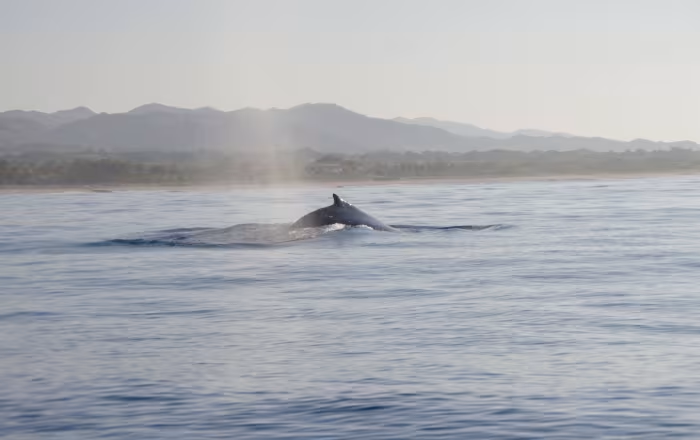
Humpbacks spend the summer feeding in cold northern waters and travel to warm tropical seas to mate and give birth. The Mexican Pacific is one of the main breeding areas in the North Pacific, and the Oaxacan coast is part of that winter range. That is why the surface activity here is so social: males competing, mothers with calves, groups on the move. Very little feeding happens on this stretch of coast, so what you see is mostly socializing, travel and rest. Our humpback season guide covers the calendar in detail.
The season usually runs from November to March, with the busiest months typically January and February. Weather and the whales set the schedule, so treat those months as a pattern, not a promise.
How to catch a breach from the boat
A breach lasts two or three seconds, and most people see it only after it has started. A few habits help.
- Watch the area, not just the spot. Whales often breach more than once. After one jump, keep your eyes on the same patch of water: another may follow within a minute or two.
- Notice the lead-up. Tail slaps and fin slaps nearby can mean a whale is in an active mood.
- Keep the camera ready, not at your eye. Set your phone or camera to burst mode and keep both eyes on the sea. When the splash rises, press and keep pressing.
- Call it out. Spotted a blow or a splash? Say so. More eyes help the captain read the whales.
- Stay where the crew puts you. A steady boat and a good spot along the side beat a wobbly step toward the bow.
How close do boats get?
Closer than it looks on paper, and farther than it feels on a phone screen. In Mexico, whale watching is governed by the federal standard NOM-131-SEMARNAT-2010, which sets minimum distances, limits how many boats can be around the same whales and for how long, and calls for extra care around mothers and calves. Captains approach slowly from the side or from behind and never chase. When a whale breaches, it does so by its own choice, at its own distance. The details are in our guide to the whale watching rules in Mexico.
Will we see a breach on the tour?
Maybe, and that is as honest as we can be. Our sunrise tour is a dolphin tour first: dolphins live off Puerto Escondido all year and are seen on most departures. From November to March, humpbacks are a regular bonus at no extra cost, and the captain watches for blows the whole morning. Some trips you get a distant blow and a tail; other mornings a whale breaches again and again. No boat can promise it, private or shared.
Early morning helps. The sea is usually at its flattest, so blows and splashes are easier to spot, and you are not squinting into midday glare. The tour lasts about 3 hours, with hotel pickup at 6:30 AM.
Common questions
Is breaching bad for the whale?
It takes effort, but it is normal behavior for healthy whales. The risk comes from boats: crowding, chasing or cutting across a whale's path can stress it, which is why the rules exist.
Do other animals breach too?
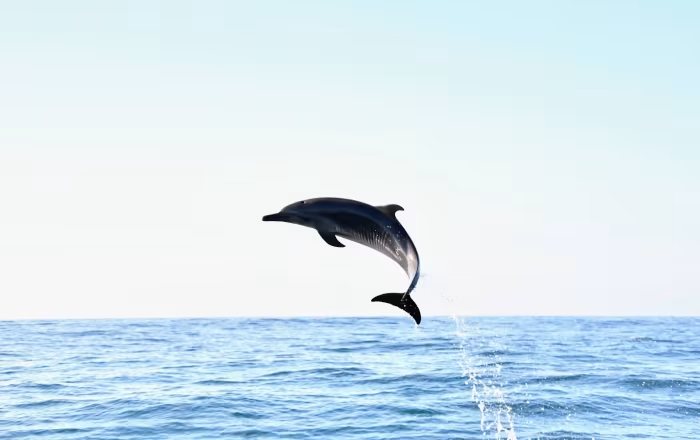
Yes, several whale species do, and so do dolphins in their own way. The famous leap and spin of spinner dolphins is a very different thing from a humpback's breach, and you can see both from the same boat in winter.
Can I swim with a whale?
No. Swimming with, touching or feeding whales is not allowed, and on our tour everyone stays on the boat. Any close approach is the whale's choice.
If you are planning a trip around the season, our whale watching guide is the best place to start.