Whale sharks in Puerto Escondido: rare visitors, not a season
Every few months a photo goes around Puerto Escondido's group chats: a huge spotted shape gliding under a fishing panga, or a tall dorsal fin cutting slowly across a calm morning sea. Whale sharks do turn up off the Oaxacan coast. But if you are planning a trip around seeing one, it is worth knowing the honest picture before you book: here they are rare, unpredictable visitors, not a season you can plan around. This guide explains how often they appear, how to recognize one, and where in Mexico you can actually count on them.
Is there a whale shark season in Puerto Escondido?
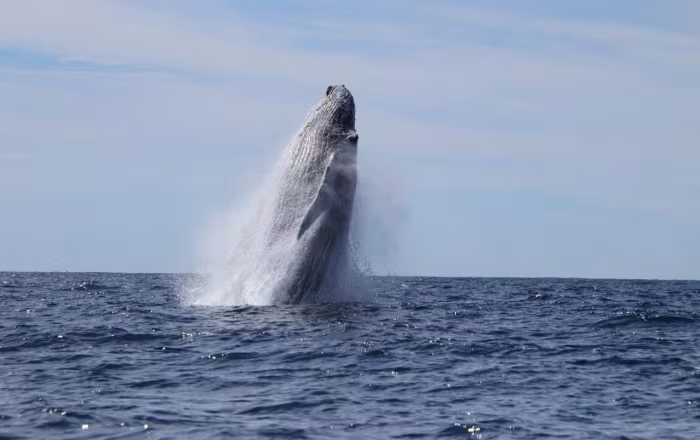
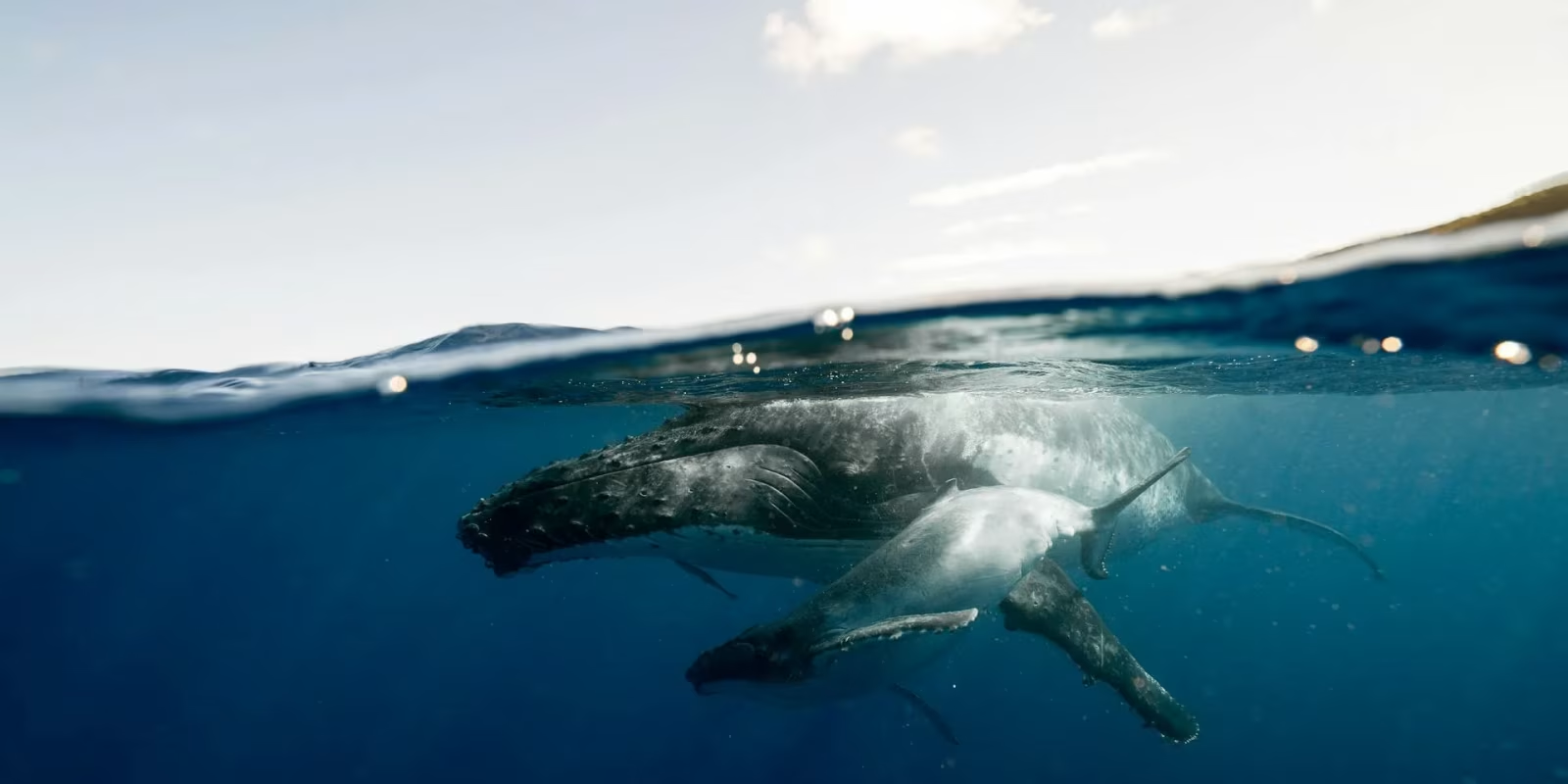
No. Unlike the humpback whales, which arrive most years between late November and March, whale sharks off Puerto Escondido follow no calendar anyone can publish. Sightings along this coast are occasional and scattered: a fisherman's video one year, a report from divers near Huatulco another, then long stretches with nothing at all. In June 2020, for example, a whale shark filmed swimming in a Huatulco bay was picked up by the national travel press precisely because it was so unusual.
There is no feeding ground here where whale sharks gather the way they do in a handful of places elsewhere in Mexico. When one passes Puerto Escondido, it is usually a single animal moving along the coast, and it may spend a morning near the surface or never come up where anyone can see it.
Whale shark or whale? A common mix-up
Part of the confusion comes from the name. A whale shark is not a whale. It is a shark, and the largest fish in the sea, usually somewhere between 5 and 12 meters long, with rare individuals larger still. It gets the name from its size and from the way it feeds: like the great baleen whales, it filters tiny food out of the water, swimming slowly with its wide mouth open to take in plankton, fish eggs and small fish. It has no interest in people and is not dangerous to swimmers or boats.
The difference matters on the water. A humpback is a mammal, so it has to come up to breathe, and its misty blow gives it away from far off. A whale shark breathes through gills and never needs to surface. You only see one when it happens to feed or cruise right at the top of the water, which is a big reason sightings are so hit and miss.
In Spanish the two are also easy to confuse: ballena is a whale, tiburón ballena is a whale shark. If a local tells you there were "ballenas" this morning in December, they almost certainly mean humpbacks.
How to recognize a whale shark from the boat
If you ever do get lucky, these are the signs:
- Two fins, far apart. At the surface you often see the dorsal fin and, several meters behind it, the tip of the tail. Dolphins show one small curved fin at a time.
- A slow, side-to-side tail. Sharks swim by sweeping the tail sideways. Whales and dolphins move theirs up and down.
- Spots and stripes. Through clear water the back looks dark gray-blue covered in pale spots and lines, a pattern unique to each animal, like a fingerprint.
- A broad, flat head. The mouth sits right at the front of the head, not underneath it like most sharks.
- No blow, no hurry. It cruises at walking pace and doesn't leap.
The animals most often mistaken for a whale shark here are mobula and manta rays, whose wing tips can break the surface like two fins, and the occasional large fish finning near the top. Our guide to marine wildlife beyond dolphins covers the rays, turtles and seabirds you are far more likely to meet.
What happens if one shows up on the dolphin tour?
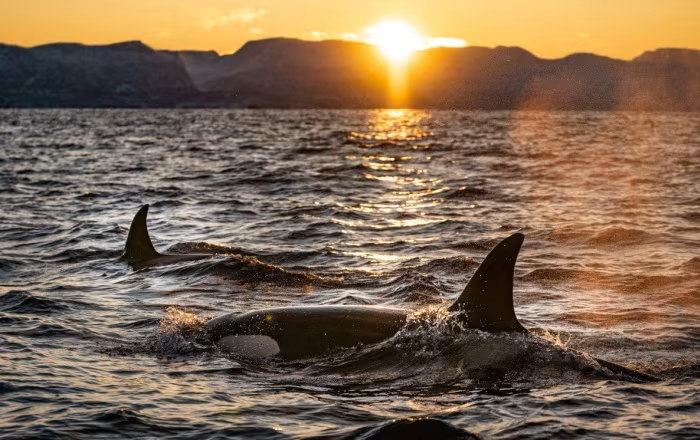
It is a bonus, never part of the plan. The sunrise tour goes out for the dolphins, which appear on the vast majority of mornings, and in season for the humpbacks. A whale shark sighting is in the same category as the orcas: something a captain might see a handful of times over many years at sea.
If one does appear, the captain treats it the way he treats any large animal. The boat slows down well before reaching it, approaches from the side rather than head-on, puts the engine in neutral and lets the shark decide where it goes. Nobody chases it, and nobody jumps in: the tour is a boat trip, not a swim, and a slow-moving shark near the surface is easy to injure with a propeller or a crowd of boats. Whale sharks are listed as Endangered worldwide by the IUCN and as threatened under Mexican law, so every encounter deserves that care.
Where whale sharks are reliable in Mexico
If swimming with a whale shark is high on your list, Mexico is one of the best countries in the world for it, just not on this stretch of coast. The well-known gathering spots, each with regulated tours and permitted operators, are:
- The Mexican Caribbean off Holbox, Isla Mujeres and Cancún, roughly from June to September.
- Bahía de La Paz in Baja California Sur, mostly from about October to April.
- Bahía de los Ángeles in the Gulf of California, usually in the summer and early fall.
Dates shift from year to year, and each area has its own rules on group size, distances and swimming time, so check with a licensed operator before you go. Seeing one there is a planned trip. Seeing one off Puerto Escondido is a story you tell for years.
Quick answers
Can you swim with whale sharks in Puerto Escondido?
No. There is no whale shark tour here, because there is no predictable place or season to find them. Any offer to "swim with whale sharks" in Puerto Escondido should make you suspicious.
What is the best month to see a whale shark in Oaxaca?
There isn't one. Sightings have been reported in different months, and most years there are few or none near Puerto Escondido. For a big animal you can plan around, come between December and March for the humpbacks.
Are whale sharks dangerous?
No. They feed on plankton and small fish and are known for ignoring people. The risk runs the other way: boats and propellers are among the main threats to them.
Whale sharks aren't the only rare giants on this coast. Read about orcas and false killer whales off Oaxaca for the other once-in-a-long-while sightings, or our humpback season guide for the big animals you can actually plan for.