Are dolphin sightings guaranteed? How tours actually find the pods
It is the question almost everyone asks before booking: if I get up at dawn and pay for the boat, am I sure to see dolphins? The short, honest answer is no. Nobody can guarantee a sighting of wild animals in the open Pacific. The longer answer is more encouraging, because off Puerto Escondido the odds are very much on your side. Here is why, and how the captains actually go about finding the pods.
Why no honest tour can promise dolphins
The dolphins you see on this tour are wild. They are not kept in a pen, they are not fed to stay near the bay and nobody calls them over. They move with the fish they eat, with the currents and with the weather, and on any given morning they may be feeding a few kilometers farther out than the day before.
That is exactly what makes the encounter worth having, and it is also why you should be wary of any operator that uses the word "guaranteed" without conditions. A promise like that either hides small print or suggests practices you would not want to support, such as chasing animals until they cannot get away. Mexican regulations on watching marine mammals (NOM-131) exist precisely to stop boats from harassing them.

So what are the real odds?
Very good. Off Puerto Escondido, a deep-water shelf meets warm tropical currents and creates a feeding corridor that holds dolphins all year. The pods do not migrate away for a season the way humpback whales do, so there is no "off month" for dolphins. On the sunrise tour, dolphins show up on more than 95% of departures.
Put the other way round, on a small share of mornings the boat comes back without a proper encounter. It happens rarely, but it happens, and it is better to know that before you go than to be told something else at the dock.
How captains find the pods
Finding dolphins is less about luck than about reading the sea. The captains who run this tour were born here and have spent years on these waters, many of them as fishermen first. This is what they look for.
Starting at first light
The boat leaves early for a reason. At dawn the water is usually at its calmest, which makes fins and splashes much easier to spot from a distance, and the dolphins tend to be active and feeding in the morning. A flat sea is also a more comfortable ride for you.
Birds
Diving frigatebirds and other seabirds are one of the best clues. When birds circle and drop on one patch of water, there is usually a school of small fish below, and where there are bait fish there are often dolphins pushing them toward the surface.
The surface itself
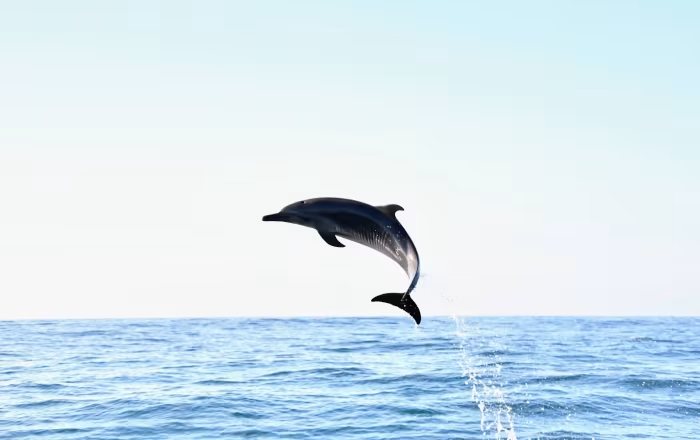
A patch of ruffled or "boiling" water on an otherwise smooth sea, a flash of white in the distance, a dark fin breaking the surface: experienced eyes pick these up long before most passengers do. Spinner dolphins also give themselves away by leaping and spinning clear of the water, which can be seen from far off.
Local knowledge and shared news
Captains know where the pods have been feeding in recent days, and the briefing at the lanchas includes the latest sightings. That is the starting point; the rest is adjusting to what the sea shows that morning.
Cutting the engine
Once a pod is found, the captain slows down and usually cuts the engine. The boat drifts, and the dolphins decide whether to come closer. Many do, sometimes riding the bow just an arm's length away. Chasing a pod would make them dive and leave; patience is what produces the close encounters. We explain the approach in more detail in responsible dolphin watching.
What a sighting can look like
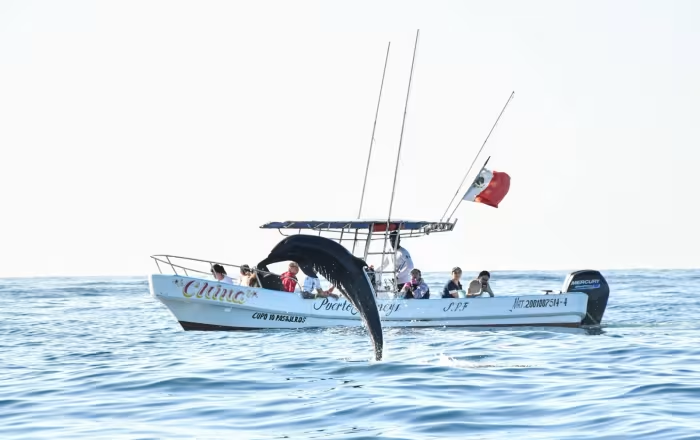
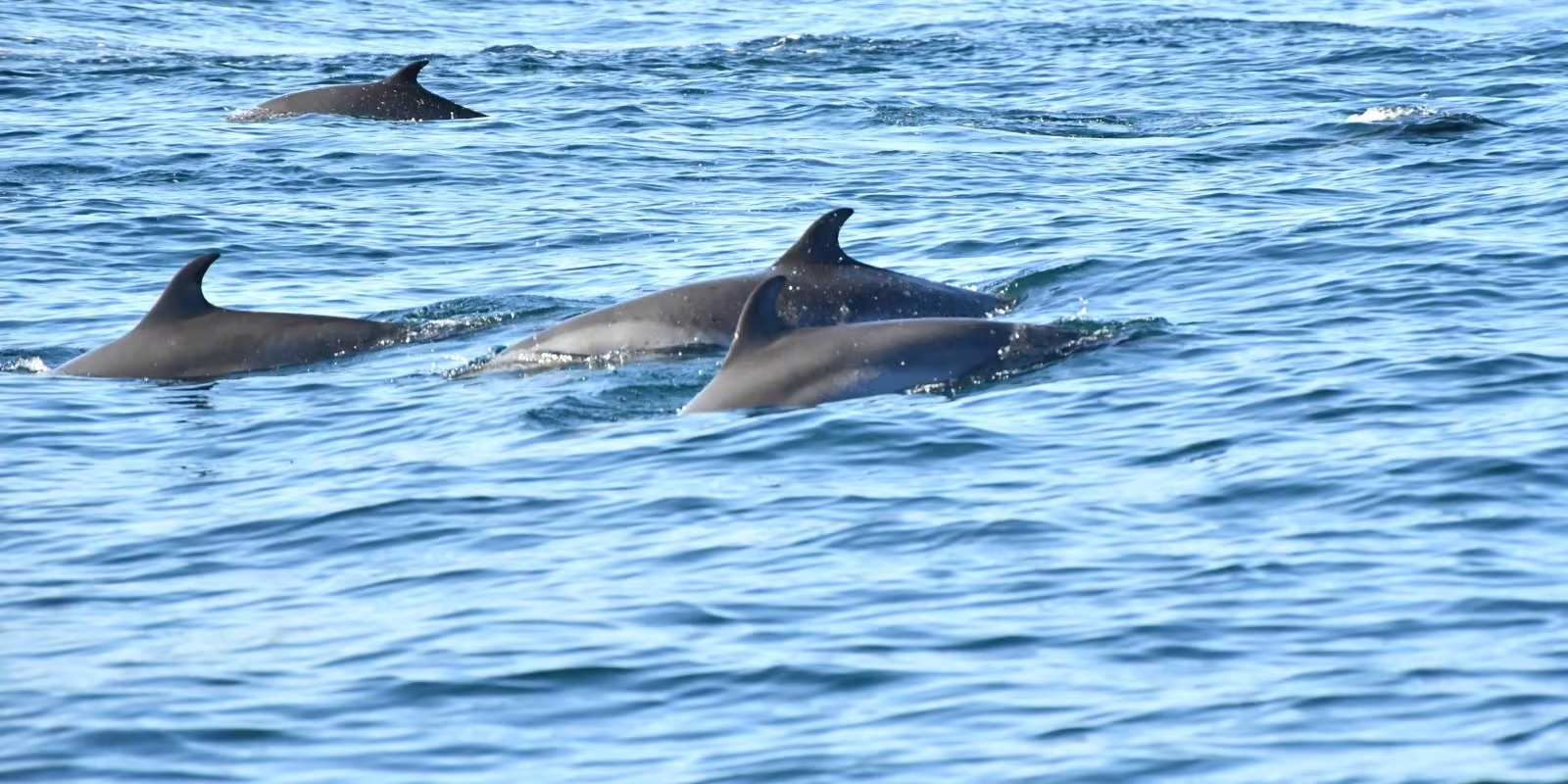
"We saw dolphins" can mean very different things, and it helps to set expectations. Some mornings a pod of a couple of dozen animals passes by and you watch them travel for a while. Other mornings a group of a hundred or more surrounds the boat, with spinners leaping on every side. Most days land somewhere in between. You will mostly see spinner dolphins, sometimes with bottlenose or pantropical spotted dolphins; our guide to the dolphin species off Puerto Escondido tells them apart.
Then there are the extras that do not depend on the dolphins at all: green sea turtles, spotted eagle rays and flying fish near the coast, the Zicatela cliffs seen from the water and, from November to March, a real chance of humpback whales. More on that in whale watching in Puerto Escondido.
What if the weather says no?
Sometimes the decision is not about the dolphins but about the sea. When the port authority closes the bay because of weather, boats do not go out, and you get a full refund or free rebooking. Separately, cancellation is free up to 24 hours before departure if your own plans change.
If you have some flexibility, booking the tour early in your stay is a simple way to improve your odds of a great morning: if the weather closes the port, you still have days left to go out again.

How to give yourself the best chance
- Go early in your trip. It leaves room to rebook if the bay closes.
- Book ahead in high season. From November to April the sunrise departures fill up several days in advance.
- Bring sunglasses with a strap. Cutting the glare helps you spot fins yourself instead of waiting for the guide to point.
- Look where the guide looks. When the captain changes course, scan in that direction; the first signs are often subtle.
- Keep your voice down and stay seated when asked. A calm boat is a boat dolphins are more willing to approach.
- Take your seasickness tablet in time if you need one, 30 to 60 minutes before departure, so you are watching the water instead of the floor.
Quick answers
Is a dolphin sighting guaranteed?
No. No wildlife tour can guarantee it, but dolphins are seen on more than 95% of sunrise departures.
Is there a best season to see dolphins?
Dolphins are around all year. The season mainly changes sea conditions and adds humpback whales from November to March; see the best time for dolphin watching.
Can the captain take us closer?
The captain lets the dolphins set the distance. Often that means they come right to the bow on their own.
The bottom line
A wild encounter cannot be promised, and that is part of its value. What you can count on is a crew that knows these waters, an early start when the odds are best and a sea where dolphins live all year. If you want to know how the rest of the morning unfolds, read what happens on a sunrise dolphin tour.